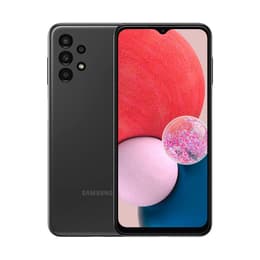
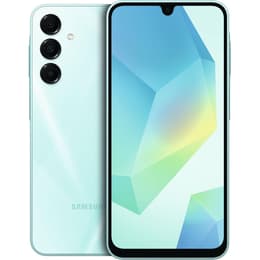

Galaxy A13 vs Galaxy A16

Galaxy A13
Galaxy A13
Από:

Τιμή ανακατασκευασμένου:108,00 €

Αντί 249,00 € καινούριο

Δες επιλογές
Galaxy A16
Galaxy A16
Από:

Τιμή ανακατασκευασμένου:142,00 €

Αντί 250,00 € καινούριο

Δες επιλογές

Βαθμολογίες

The Samsung Galaxy A13, released in March 2022, and the Samsung Galaxy A16, launched in late 2024, represent different generations within Samsung's accessible A-series smartphone lineup. While both devices aim to provide essential smartphone functionalities, the Galaxy A16 introduces several enhancements, particularly in display technology, software longevity, and overall user experience. Both run on the Android operating system, offering access to a wide range of applications and services.

Αποτελέσματα

Ανθεκτικότητα

When evaluating the practical lifespan of these devices, their respective release timelines and software support policies are key considerations.

  • Release Timeline: The Galaxy A13 was released in March 2022, making it an older model compared to the Galaxy A16, which launched in late 2024. This difference in release year directly impacts their remaining support cycles.
  • Software Longevity: The Galaxy A13, which originally shipped with Android 12, received two major Android OS updates, bringing it up to Android 14, and is expected to receive security updates until late 2025. In contrast, the Galaxy A16 launched with Android 14 (or Android 15, depending on the specific variant and region) and is notable for Samsung's commitment to providing six generations of OS updates and six years of security updates, extending its support until October 2030. This extended support period means the A16 will remain current and secure for a significantly longer duration.
  • Durability Features: The Galaxy A13 features a glass front protected by Corning Gorilla Glass 5, with a plastic back and frame. The Galaxy A16 also utilizes a plastic construction for its body but adds an IP54 rating for dust and splash resistance, offering a degree of protection against everyday elements.

Έτος κυκλοφορίας

2022

2024

Λειτουργικό σύστημα

Android

Android

Πτυσσόμενο

Όχι

Όχι

Απόδοση

The performance of both smartphones is designed to handle everyday tasks, with the newer Galaxy A16 offering a more responsive experience due to its updated internal components.

  • Processing Capabilities: The Galaxy A13 is equipped with an octa-core processor that capably manages daily applications and general web browsing. The Galaxy A16, depending on the variant, features a more current octa-core processor, such as the MediaTek Dimensity 6300 or Exynos 1330 for the 5G model, or MediaTek Helio G99 for the 4G model. This results in smoother app loading, more efficient multitasking, and a more fluid overall system responsiveness.
  • Memory and Storage: Both devices offer various configurations for RAM and internal storage, with the Galaxy A13 available with 3GB, 4GB, or 6GB of RAM and storage options from 32GB to 128GB. The Galaxy A16 typically starts with 4GB of RAM and offers up to 8GB, with internal storage options of 128GB or 256GB. Both models support expandable storage via a microSD card, allowing users to increase their storage capacity.
  • Battery Behavior: Both the Galaxy A13 and Galaxy A16 are powered by a 5000 mAh battery, designed to provide ample power for a full day of typical use. The Galaxy A13 supports 15W fast charging, while the Galaxy A16 benefits from faster 25W Super Fast Charging, allowing for quicker recharges.

Μνήμη (GB)

4 GB

4 GB

Ποιότητα οθόνης

The display is a significant area of difference, with the Galaxy A16 offering a more advanced visual experience compared to its predecessor.

  • Display Technology and Clarity: The Galaxy A13 features a 6.6-inch PLS TFT LCD with a Full HD+ resolution (1080 x 2408 pixels), providing clear visuals for everyday content. The Galaxy A16 steps up to a 6.7-inch Super AMOLED display with a Full HD+ resolution (1080 x 2340 pixels). Super AMOLED technology is known for its vibrant colors, deeper blacks, and higher contrast ratios, enhancing the viewing experience for media consumption.
  • Refresh Rate and Brightness: The Galaxy A13 has a standard 60Hz refresh rate. The Galaxy A16 features a 90Hz refresh rate, which contributes to smoother scrolling and a more fluid feel when navigating the interface or playing compatible games. The A16 also offers a peak brightness of 800 nits, which can improve outdoor visibility compared to the A13's typical brightness levels.
  • Screen Size and Viewing Experience: Both phones offer large displays, with the A16 having a slightly larger 6.7-inch screen compared to the A13's 6.6-inch display. This provides an expansive canvas for watching videos, browsing the web, and interacting with applications.

Ανάλυση οθόνης

1080 x 2408

1080x2340

Τύπος οθόνης

PLS LCD

Super AMOLED

Οπτικοακουστικά μέσα

Both devices are equipped with multi-camera systems designed for versatile photography in various conditions, with the Galaxy A16 offering some refinements.

  • Rear Camera System: The Galaxy A13 features a quad-camera setup, including a 50-megapixel main sensor, a 5-megapixel ultrawide lens, a 2-megapixel macro lens, and a 2-megapixel depth sensor. The Galaxy A16 comes with a triple-camera system, also featuring a 50-megapixel main sensor, a 5-megapixel ultrawide lens, and a 2-megapixel macro lens. Both main cameras are capable of capturing detailed images in good lighting.
  • Front Camera and Video Recording: For selfies and video calls, the Galaxy A13 has an 8-megapixel front camera, while the Galaxy A16 features a 13-megapixel front camera, potentially offering more detail in self-portraits. Both devices are capable of recording video at 1080p resolution at 30 frames per second.
  • Audio Output: Both smartphones provide a loudspeaker for media consumption and calls. The Galaxy A13 includes a 3.5mm headphone jack for wired audio accessories. The Galaxy A16, however, omits the 3.5mm headphone jack, relying on USB-C or wireless audio solutions.

Διάφορα

Beyond core performance and display, several practical elements differentiate the user experience between these two Galaxy models.

  • Connectivity Options: The Galaxy A13 supports 4G LTE networks, along with Wi-Fi 5 (802.11 a/b/g/n/ac) and Bluetooth 5.0. The newer Galaxy A16 offers 5G connectivity, providing faster mobile data speeds where available, and features Bluetooth 5.3 for improved wireless accessory connections. Both include NFC for contactless payments in supported regions.
  • Physical Design and Ports: The Galaxy A13 has dimensions of 165.1 x 76.4 x 8.8 mm and weighs 195g, featuring a USB Type-C 2.0 port and a 3.5mm headphone jack. The Galaxy A16 is slightly thinner at 7.9mm and weighs 200g, also featuring a USB Type-C 2.0 port but notably removing the 3.5mm headphone jack.
  • Security and Durability Features: Both phones incorporate a side-mounted fingerprint sensor for secure unlocking. The Galaxy A16 introduces an IP54 rating, offering protection against dust and splashes, a feature not present on the Galaxy A13.

Βάρος

195 γρ.

200 γρ.

Μέγεθος οθόνης

6.6

6.7

Δίκτυο

4G

4G

Κάρτα SIM

Διπλή Φυσική SIM

Φυσική SIM

Πάροχος δικτύου

Ξεκλείδωτο

Ξεκλείδωτο

The Samsung Galaxy A13 and Galaxy A16 cater to users seeking reliable Android smartphones, but they target slightly different priorities due to their generational gap. Users often praise the Galaxy A13 for its solid battery life and capable camera system for its release period. However, some users have noted its LCD display and more limited software update policy as areas where it shows its age.

The Galaxy A16, being a newer model, generally receives praise for its vibrant Super AMOLED display with a smoother 90Hz refresh rate, its 5G connectivity, and especially its significantly extended software support, promising updates for six years. Criticisms for the A16 sometimes point to the removal of the 3.5mm headphone jack and, in some reviews, a battery life that, while still good, might not always surpass its predecessor despite the same capacity.

Users prioritizing long-term software support, a more modern display experience, and faster mobile connectivity will find the Galaxy A16 well-suited to their needs. Its IP54 rating also adds a layer of practical durability. Conversely, those who prefer a traditional headphone jack and are content with a capable, albeit older, LCD display and shorter software support window might still consider the Galaxy A13. For consumers looking for an eco-friendly alternative, both models are available as quality-assured refurbished options, offering a sustainable choice for their next smartphone.
Δείτε όλα τα άρθρα

Οι πρόσφατες συγκρίσεις μας